
Open-ended play is play with no fixed outcome or single right answer, using materials like blocks, loose parts, art supplies and pretend play props. Because children must decide what to make and figure out how to make it work, open-ended play naturally builds problem-solving skills, creativity, flexible thinking and resilience.
Here, the ThomsonKids.com Editorial Team explains how this works, which materials to offer and how to support play without taking it over.
Key Takeaways
- Open-ended toys can be used in many ways, so children set their own goals.
- Every attempt, collapse and redesign is a small problem-solving exercise.
- This kind of play also builds creativity, persistence and confidence.
- Simple materials often work better than complex, single-purpose toys.
- Adults help most by offering time, space and open questions, then stepping back.
What Is Open-Ended Play?
Open-ended play happens when children use materials freely, without instructions or a predetermined result. A set of wooden blocks might become a castle on Monday, a zoo on Tuesday and a racetrack on Wednesday. The child, not the toy, decides what happens.
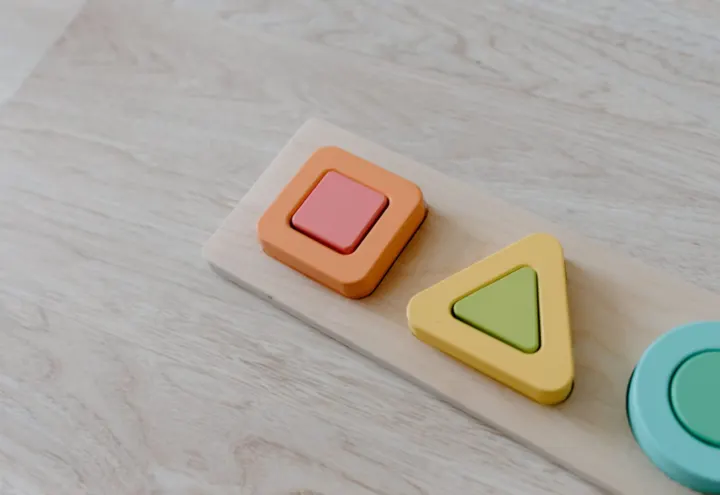
In contrast, closed-ended toys have one intended use and a clear finish line, like a jigsaw puzzle or a shape sorter. These have real value too, especially for practicing specific skills, and at ThomsonKids.com we recommend keeping a few in the mix. But open-ended materials invite a broader kind of thinking that is hard to get any other way.
Open-Ended vs. Closed-Ended Toys
| Feature | Open-Ended Toys | Closed-Ended Toys |
|---|---|---|
| Outcome | Many possible results | One correct result |
| Who sets the goal | The child | The toy’s design |
| Main skills | Creativity, planning, flexible thinking | Specific skills like matching or sequencing |
| Replay value | High; play changes each time | Lower once mastered |
| Examples | Blocks, loose parts, play silks, art supplies | Jigsaw puzzles, shape sorters, matching games |
How Open-Ended Play Builds Problem Solving
Children Define Their Own Problems
When a child decides to build a bridge for a toy car, they have created a real problem to solve. That ownership is motivating. Children tend to persist longer with goals they chose themselves than with tasks assigned by adults. The AAP’s tips on how to raise a problem solver through play make a similar point: a little friction is good for children.
Trial and Error Becomes Natural
Towers fall. Roofs slide off. Ramps are too steep. Each failure gives children instant feedback, and they adjust: a wider base, a different block, a lower angle. This cycle of trying, observing and revising is the core of problem solving and of the engineering design process. NAEYC’s 10 things every parent should know about play highlights the same link: children build thinking skills such as problem solving, and physical skills such as balancing blocks, through play.
Flexible Thinking Grows
Using a cardboard tube as a telescope, a tunnel and then a microphone teaches children that objects and ideas can be seen in more than one way. This flexibility, sometimes called divergent thinking, helps children approach new problems creatively.
Collaboration Adds New Challenges
When children play together, they have to share materials, combine ideas and negotiate. Deciding whose plan to follow, or how to merge two plans, is problem solving of a social kind, and just as important.
Resilience and Confidence Develop
Because there is no “wrong” way to play, children feel free to experiment. Working through small frustrations and finding their own solutions builds the confidence to tackle bigger challenges later.
Best Open-Ended Toys and Materials
- Wooden blocks and building sets: The classic open-ended toy for every age.
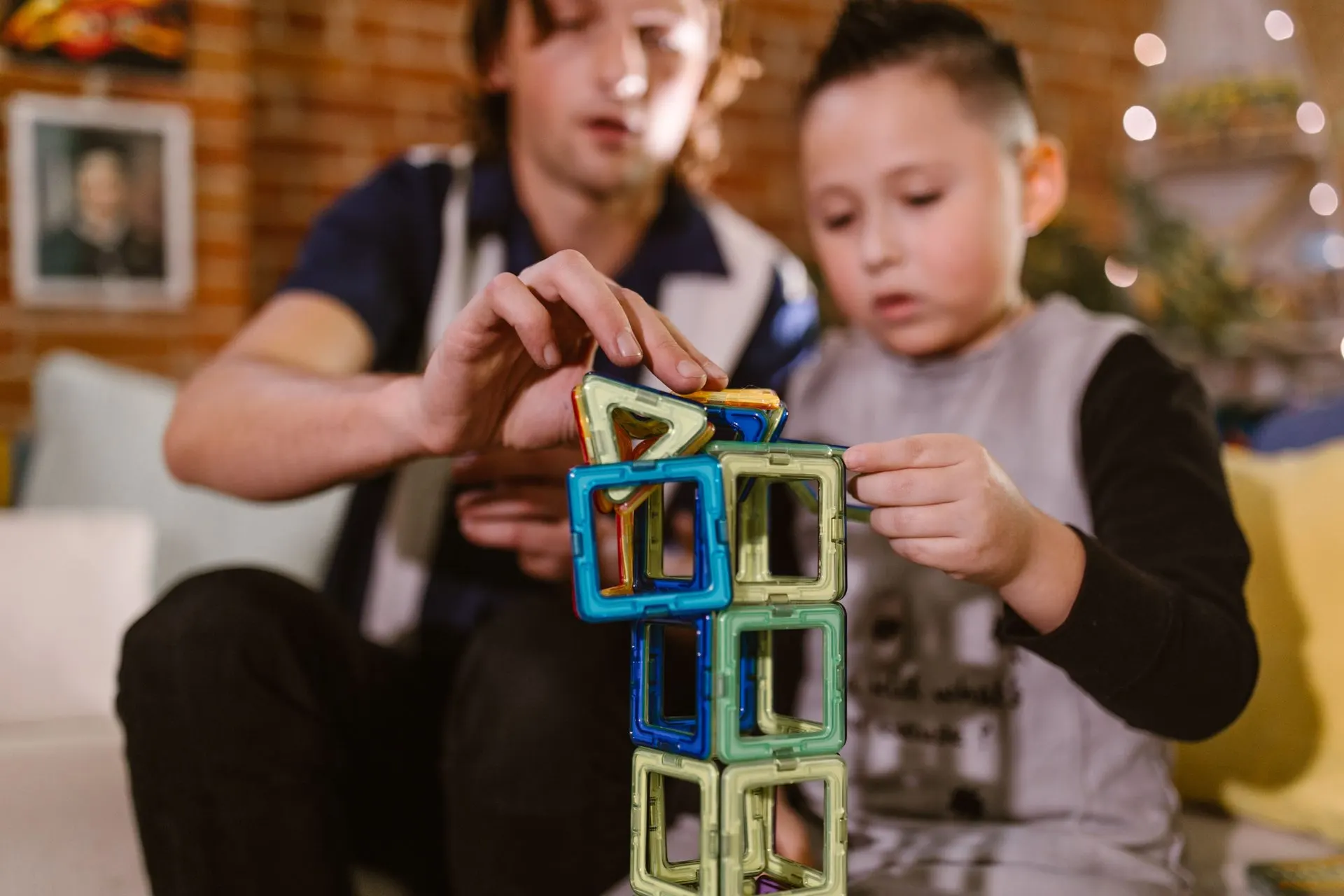
- Magnetic tiles: Great for 2D patterns and 3D structures. Choose sturdy, well-sealed tiles from reputable makers.
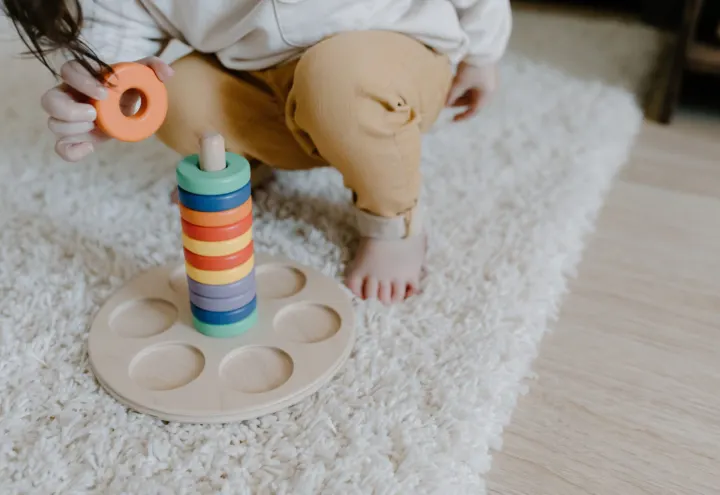
- Loose parts: Shells, pinecones, fabric scraps, spools and wooden rings. Keep small loose parts away from children under three.
- Play silks and scarves: Capes, rivers, picnic blankets or fort roofs.
- Art supplies: Paper, crayons, clay, tape and recycled materials.
- Pretend play props: Simple kitchen sets, dolls, animal figures and dress-up clothes.
- Cardboard boxes: Possibly the most open-ended toy of all.
Long indoor afternoons are a perfect time to bring these out, and our screen-free rainy day activities include several open-ended ideas to start with.
How Parents Can Encourage Open-Ended Play
- Offer time. Deep play needs long, unhurried stretches without interruptions.
- Limit the options. A small selection of materials often sparks more creativity than an overflowing bin.
- Ask open questions. Try “Tell me about what you built” or “What could you try next?” instead of offering solutions.
- Resist fixing. When something falls, wait. Your child may find a solution you would not have thought of.
- Allow mess within limits. Agree on a play space and a cleanup routine so creativity has room to spread.
- Value the process. Praise effort and ideas rather than the finished product.
Open-Ended Play at Different Ages
Toddlers explore materials through their senses: stacking, knocking down, filling and dumping. Preschoolers begin building with a purpose and weaving stories into their creations. School-age children plan elaborate projects, combine materials in sophisticated ways and often collaborate on long-running games.
The same set of blocks can serve all of these stages, which is one reason open-ended toys offer such lasting value. If you are choosing for a specific age, our guide to educational toys for 6- to 8-year-olds shows how open-ended and structured toys work together.
Our Approach
Open-ended design is at the heart of what we make. We believe the child should do most of the work and the toy very little. Good toys are simple enough to become anything, sturdy enough to last, and free of screens so imagination can take over.
Explore more ideas in our learning activities section and screen-free play guides, or browse open-ended toys from ThomsonKids.com.
Frequently Asked Questions
What is an example of open-ended play?
Building with wooden blocks is a classic example. A child might create a tower, a house, a road or an animal enclosure, changing their plan as they go. Other examples include playing with loose parts, making art from recycled materials, dressing up and building blanket forts.
Why is open-ended play important for development?
Open-ended play lets children set their own goals, experiment and solve problems without a single right answer. This builds creativity, flexible thinking, persistence and confidence. It also supports language and social skills when children play together, explain ideas and negotiate shared plans.
Are puzzles open-ended toys?
Traditional jigsaw puzzles are closed-ended because they have one correct solution. They are still valuable for visual skills, persistence and focus. A balanced toy collection includes both closed-ended toys for specific skills and open-ended materials that invite imagination and independent problem solving.
How much open-ended play do children need?
There is no set amount, but most children benefit from some unstructured play every day. Aim for regular, unhurried stretches where your child chooses what to do with simple materials. Protecting this time from screens and scheduled activities gives deep, creative play room to grow.