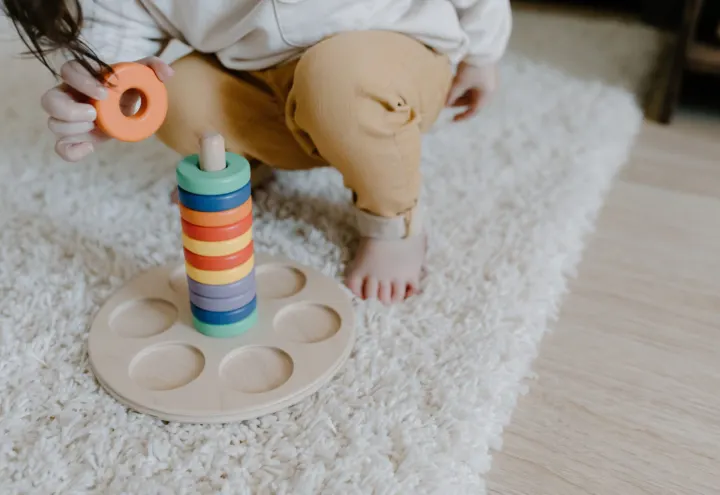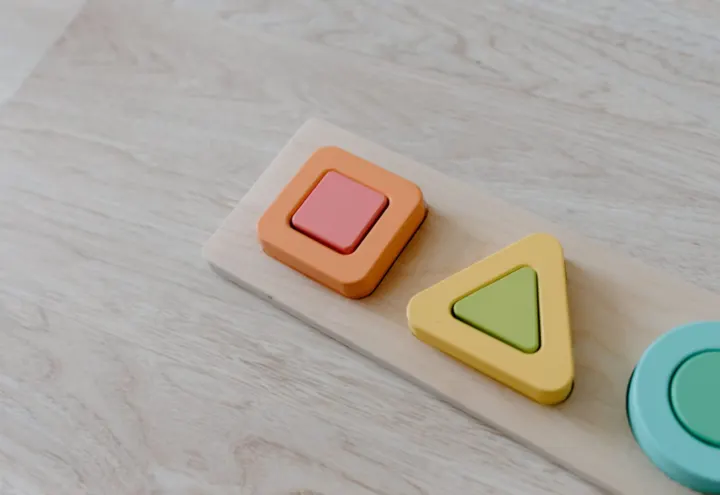


Screen-free toys matter because young children learn best through their hands, senses and imagination. Physical toys invite children to build, test, pretend and solve problems at their own pace, supporting focus, creativity, fine motor skills and social connection in ways that passive screen time cannot easily match.
At ThomsonKids.com, this belief shapes every toy we design. Below, we explain why hands-on play matters and the principles behind our work.
Key Takeaways
- Children ages 2 to 10 learn deeply through hands-on, sensory experience.
- Screen-free toys put the child in charge, rather than the device.
- Hands-on play supports focus, problem solving, language and fine motor skills.
- Good screen-free toys are simple, open-ended, durable and safe.
- Screen-free does not mean anti-technology; it means building the foundations first.
The Problem With Passive Play
Many screens and electronic toys are designed to hold attention with constant movement, sound and reward. Children may stay engaged, but often as viewers rather than doers. The device makes the decisions, sets the pace and supplies the ideas.
Young children need the opposite. They need to touch, move, experiment and make choices. Pediatric guidance, including from the American Academy of Pediatrics, generally encourages limiting recreational screen time for young children and prioritizing hands-on play, conversation and physical activity. Its guide to the power of play notes that simple, inexpensive objects such as blocks, shape sorters and puzzles are some of the best ways to support creativity.
What Screen-Free Toys Give Children
Deep Focus
A simple toy does not interrupt. Without notifications, animations or autoplay, children can settle into an activity and stay with it. Practicing sustained attention in play supports the ability to concentrate later at school.
Real-World Problem Solving
When a block tower falls, the feedback is immediate and physical. Children learn cause and effect directly, adjust their approach and try again. Each attempt teaches something that a tap on a glass screen cannot.
Fine Motor and Sensory Development
Gripping, stacking, threading and turning develop the small muscles of the hand. Different textures, weights and temperatures give the brain rich sensory information that a flat glass screen cannot provide.
Imagination and Language
Without a script to follow, children invent their own stories. Pretend play with simple props builds vocabulary, narrative skills and empathy as children try on different roles. The AAP’s guide to non-tech toys that promote language and learning observes that when toys talk, parents talk less, and children vocalize less too.
Connection
Physical toys are naturally social. Siblings build together, parents join a game on the floor, friends negotiate rules. These shared moments matter for emotional development and family relationships.
Our Design Principles
At ThomsonKids.com, we design screen-free, Montessori-inspired and STEM-focused toys for children ages 2 to 10. Every toy we make is shaped by a few guiding principles.
- The child does the work. Our toys do nothing until a child acts on them. Curiosity is the power source.
- Purpose over features. We focus each toy on clear skills rather than piling on extras that distract.
- Open-ended by design. Wherever possible, toys can be used in many ways and grow with a child.
- Grounded in real learning. We draw on Montessori principles and hands-on STEM thinking.
- Built to last. Durable materials mean toys can be rotated, revisited and passed on.
- Safety at every step. Clear age guidance, careful sizing for younger children and thoughtful materials.
If you want to apply the same safety thinking at home, our toy safety checklist walks you through age labels, small parts, batteries and magnets.
How Our Toy Categories Support Learning
| Category | Focus | Skills Supported |
|---|---|---|
| Montessori toys | Simple, purposeful, self-correcting materials | Independence, concentration, fine motor control |
| STEM toys | Building, testing and logical thinking | Spatial reasoning, sequencing, problem solving |
| Screen-free play | Creative, imaginative and active play | Creativity, language, social skills |
| Toys by age | Matching challenge to development | Age-appropriate growth from 2 to 10 |
Each area has its own collection on our site, from Montessori materials for focused, independent play to STEM toys for budding builders. Our screen-free play section is a good place to start, with ideas for every season and energy level.
Screen-Free Does Not Mean Anti-Technology
We are not against technology. Today’s children will grow up using digital tools in school and work, and many of those tools are wonderful. Our belief is about sequence: strong foundations first.
The logic behind coding, the curiosity behind science and the persistence behind engineering can all be developed with physical materials. Children who have built, tested and debugged with their hands bring those skills to screens later with more understanding.
Bringing More Screen-Free Play Home
You do not need to transform your home overnight. Small steps make a real difference:
- Set up a low shelf with a few inviting toys and rotate them regularly.
- Create screen-free times, such as mornings and the hour before bed.
- Keep simple art and building materials easy to reach.
- Join your child on the floor for a few minutes of play each day.
- Choose fewer, better toys that can be used in many ways.
For step-by-step help with the transition, see our guide on how to reduce screen time for kids, and find more practical articles on our parenting and play blog.
Our Promise to Families
We want every toy to earn its place in your home: by being played with often, by teaching something meaningful and by lasting long enough to become a favorite. That is the standard we hold ourselves to, and it is why we focus on thoughtful design rather than flashy features.
To discover the full collection, explore the ThomsonKids.com approach to play on our homepage.
Frequently Asked Questions
What are screen-free toys?
Screen-free toys are physical toys that do not rely on a screen, app or video to work. They include blocks, puzzles, building sets, pretend play props, art supplies and unplugged coding games. They encourage children to play actively with their hands, imagination and problem-solving skills.
Are screen-free toys better for child development?
For young children, hands-on toys offer important benefits that screens cannot easily replace, including fine motor practice, sensory input, sustained focus and imaginative play. A healthy balance that prioritizes physical play, sleep and family time supports development well, in line with general pediatric guidance.
What ages are screen-free toys suitable for?
Screen-free toys suit every age. Toddlers explore stacking and simple puzzles, preschoolers enjoy pretend play and building, and school-age children dive into strategy games and engineering sets. Choose toys labeled for your child’s age, especially avoiding small parts for children under three.
How does ThomsonKids.com decide what toys to make?
We start with a child’s developmental needs, not with features. Each design must build clear skills, invite independent or open-ended play, work without screens, and be durable and safe for its age group. If a toy does the thinking for the child, it does not make the cut.