
The best toys for a 3-year-old support the skills that are blooming at this age: fine motor control, language, pretend play, early problem solving and big physical movement. Look for simple, sturdy, open-ended toys such as chunky puzzles, building blocks, pretend play sets and lacing beads, and always check the age label for small-part safety.
The ThomsonKids.com Editorial Team organized this guide around the skills that typically emerge at three, followed by a safety checklist written with mouthing habits in mind.
Key Takeaways
- Three is a big year for pretend play, language and hand coordination.
- Open-ended toys like blocks and play kitchens grow with your child.
- Choose toys with a “just right” challenge: achievable with a little effort.
- Small parts remain a choking hazard; follow age labels closely.
- A few quality toys, rotated regularly, beat a crowded toy box.
What Is Developing at Age Three?
Every child develops at their own pace, but many three-year-olds share some exciting milestones. Understanding them makes toy choices much easier. For a fuller picture, the American Academy of Pediatrics lists typical developmental milestones for 3- to 4-year-olds, from copying shapes to understanding counting.
- Fine motor skills: Better control for stacking, threading, turning knobs and holding crayons.
- Language: Rapidly growing vocabulary, longer sentences and lots of questions.
- Pretend play: Acting out familiar routines like cooking, shopping and caring for dolls.
- Problem solving: Matching, sorting and simple puzzles with more pieces.
- Gross motor skills: Running, climbing, jumping and pedaling.
- Social skills: Early turn-taking and playing alongside or with other children.
Best Toy Types for 3-Year-Olds
Building Blocks and Construction Toys
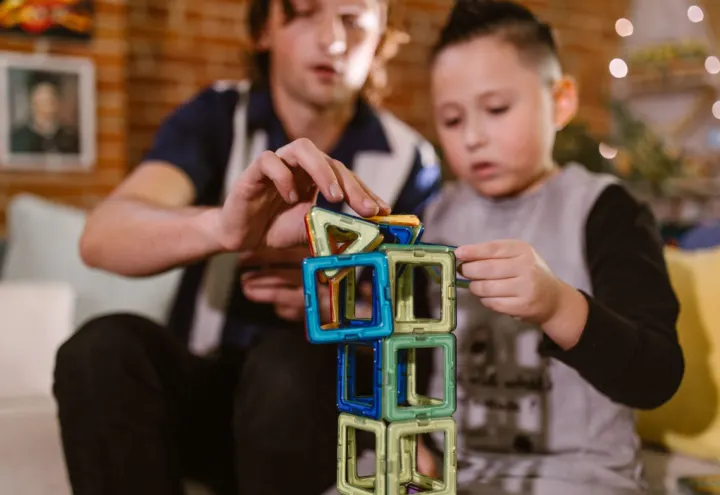
Wooden blocks, large interlocking bricks and sturdy magnetic tiles with fully sealed magnets encourage spatial thinking, balance and creativity. At three, children start building with intention, such as a “house” or “tower for my bear.” Blocks are among the most versatile toys you can own.
Puzzles and Shape Sorters
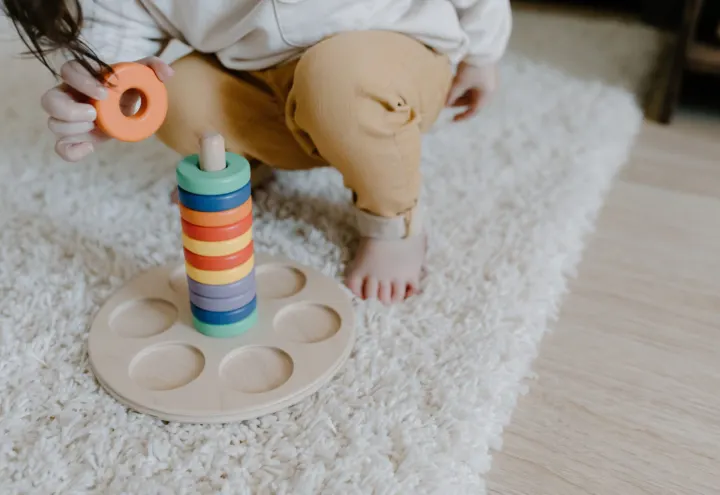
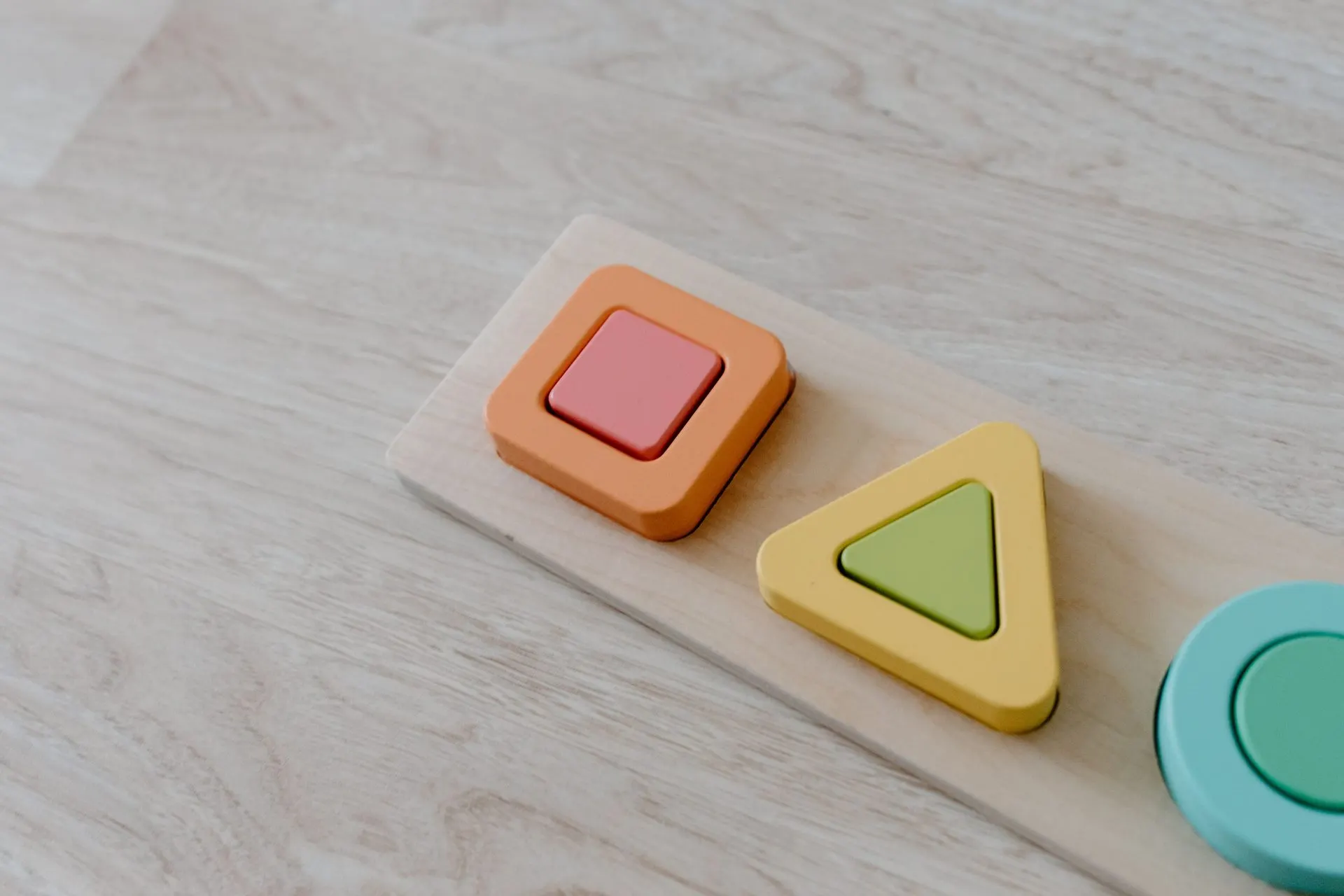
Chunky wooden puzzles with knobs or peg puzzles with a few more pieces build visual discrimination and persistence. Shape sorters and stacking cups remain useful for practicing matching and size order.
Pretend Play Sets
Play kitchens, toy food, doctor kits, tool benches and dolls let children act out the world around them. This kind of play develops language, empathy and social understanding. Keep props realistic and simple, which follows the Montessori idea of grounding young children’s play in reality.
Fine Motor Toys
Large lacing beads, threading cards, pegboards with chunky pegs and play dough with simple tools strengthen the hand muscles children will later use for writing. For more ideas, see our list of fine motor skills activities.
Art Supplies
Thick crayons, washable paints, chalk and large paper invite self-expression. Focus on the process rather than the finished product. Scribbles are an important stage of development.
Active Play Toys
Balance bikes, ride-on toys, soft balls and tunnels help burn energy and build coordination. Always supervise and use helmets with wheeled toys.
Quick Guide: Skill, Toy and Why
| Skill | Toy Ideas | What Your Child Practices |
|---|---|---|
| Fine motor | Lacing beads, pegboards, play dough | Grip strength, hand-eye coordination |
| Language | Pretend play sets, picture books, puppets | Vocabulary, storytelling, conversation |
| Problem solving | Peg puzzles, shape sorters, stacking cups | Matching, sequencing, persistence |
| Creativity | Blocks, crayons, loose parts | Imagination, planning, self-expression |
| Gross motor | Balance bike, balls, tunnels | Balance, strength, coordination |
Safety Checklist for 3-Year-Olds
Many toys are labeled “3+” because small parts can be a choking hazard for younger children. Even at three, some children still mouth objects, so watch your own child’s habits.
- Read the age label and choose toys made for your child’s age.
- Check for small or detachable parts that could come loose with rough play.
- Keep older siblings’ toys separate if they include tiny pieces.
- Avoid toys with button batteries or small magnets unless they are fully secured, as both are serious hazards if swallowed. The AAP’s tips on how to buy safe toys flag both.
- Inspect toys regularly for cracks, splinters, loose threads and broken edges.
- Look for non-toxic finishes and reputable manufacturers.
Finally, remember that no toy replaces supervision. Stay nearby during play with new toys, and put away anything that is broken until it can be repaired or replaced. Our toy safety checklist for parents covers each of these checks in more depth.
How Many Toys Does a 3-Year-Old Need?
Fewer than you might think. Too many choices can overwhelm a young child and lead to shallow, scattered play. A small selection of open-ended toys, displayed on a low shelf and rotated every week or two, often leads to longer and deeper play.
At ThomsonKids.com, we design toys with this “less but better” philosophy in mind: durable, screen-free pieces that can be used many ways and enjoyed for years.
Toys to Think Twice About
Highly electronic toys that light up, talk and play songs at the push of a button can be entertaining, but they often do most of the work. Children may press buttons and move on quickly. Simpler toys ask more of a child’s imagination and problem-solving skills.
That does not mean every electronic toy is off-limits. Just make sure the majority of your child’s toys invite them to act, build and create.
Making the Most of Play at Three
Join in sometimes, but let your child lead. Narrate what they are doing (“You put the red block on top!”) to build language. Ask open questions, and give them time to work through small frustrations before stepping in.
Browse more age-specific recommendations in our toys by age guides, explore our Montessori toys, or use the ThomsonKids.com toy guides to discover screen-free toys designed for ages 2 to 10.
Frequently Asked Questions
What toys are best for a 3-year-old’s development?
Open-ended toys are excellent at this age. Building blocks, chunky puzzles, pretend play sets, lacing beads, art supplies and balance bikes support fine motor skills, language, imagination and coordination. Choose toys that offer a gentle challenge and can be played with in many different ways.
Are toys labeled 3+ safe for all 3-year-olds?
Toys labeled 3+ are designed for children three and older, but every child is different. If your child still puts objects in their mouth, wait on toys with small parts and supervise closely. Inspect toys regularly for loose pieces, and keep tiny parts from older siblings out of reach.
Should a 3-year-old have educational toys?
Almost any good toy is educational at three. Blocks teach balance and spatial thinking, pretend play builds language, and puzzles develop persistence. Rather than seeking toys labeled “educational,” look for simple, engaging toys that let your child explore, build and imagine on their own terms.
How often should I rotate toys for a 3-year-old?
Many families rotate every one to two weeks, but let your child guide you. Keep out toys they are still absorbed in, and swap those that sit untouched. Changing just two or three items at a time keeps favorites available while adding something new to explore.