
A toy is Montessori when it is simple, grounded in reality, focused on one skill at a time, and lets the child lead the play. Material matters less than purpose: the best Montessori toys invite hands-on exploration, allow children to notice and correct their own mistakes, and leave the thinking to the child rather than the toy.
Below, the ThomsonKids.com Editorial Team breaks down the five traits to look for, with an age guide and a short checklist you can use before you buy.
Key Takeaways
- Montessori toys isolate one skill or concept, so children can focus deeply.
- Realistic, natural materials help young children connect play to the real world.
- Self-correcting designs let kids spot and fix mistakes without adult help.
- Passive toys with lights and sounds tend to entertain; Montessori toys invite the child to act.
- Match toys to your child’s current stage, not just the age on the box.
Where the Montessori Approach Comes From
Maria Montessori, an Italian physician and educator, observed that young children learn best through purposeful activity with their hands. She designed learning materials that children could choose freely, use independently, and repeat as often as they liked. The American Montessori Society’s overview of Montessori education describes this hands-on approach and its specially designed materials in more detail.
Her central idea was that the child is a capable learner, not an empty vessel. The adult’s job is to prepare a thoughtful environment and then step back. Toys built on this philosophy carry the same respect for a child’s ability to figure things out. The Association Montessori Internationale, founded by Montessori herself, still describes learning as being about the activity and independence of the child.
The word “Montessori” is not a protected label for toys, so any product can carry it. Understanding the underlying principles is far more reliable than trusting the packaging.
The Five Core Traits of a Montessori Toy
When you are evaluating a toy, look for these qualities. A toy does not need every single one, but the more it has, the more closely it aligns with Montessori thinking.
1. It Isolates a Single Skill
A classic example is a set of nesting cylinders that differ only by size. Because nothing else changes, the child’s attention goes directly to the concept being learned. Toys that try to teach colors, numbers, letters and music all at once tend to scatter a young child’s attention.
2. It Is Grounded in Reality
Montessori classrooms favor realistic objects and images over fantasy for very young children. A wooden animal that looks like a real horse helps a toddler build accurate understanding of the world before they move into imaginative play.
3. It Uses Natural, Sensory-Rich Materials
Wood, metal, cotton and wool offer varied weight, temperature and texture, which gives children richer sensory information than uniform plastic. Material is still secondary: a well-designed toy made from something else can be very Montessori in spirit.
4. It Has a Built-In Control of Error
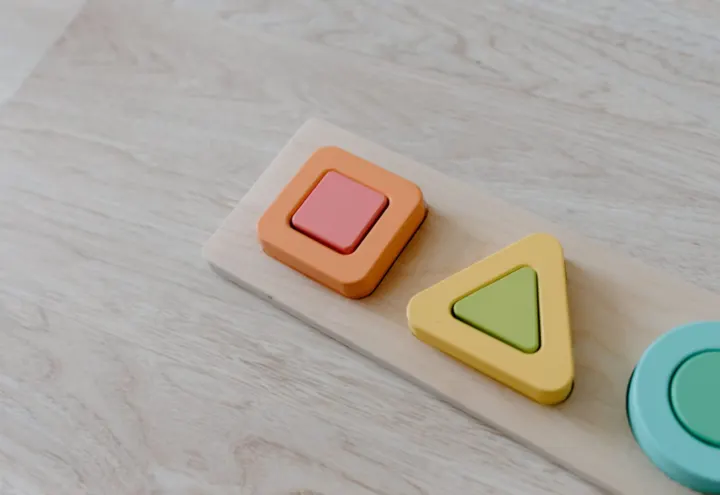
A shape sorter where only the right piece fits is self-correcting. The child sees the result immediately and adjusts. This builds independence and confidence, because the feedback comes from the material rather than from an adult saying “no, try again.”
5. The Child Is Active, the Toy Is Passive
If a toy flashes, sings and moves on its own, the child often becomes a spectator. A Montessori toy does nothing until the child acts on it. This is one reason we favor screen-free design: at ThomsonKids.com, our toys are made to be powered by curiosity rather than batteries.
Montessori Toys vs. Conventional Toys
The table below compares the two approaches side by side. Neither is “bad,” but the differences explain why Montessori-aligned toys often hold attention longer.
| Feature | Montessori-Aligned Toy | Typical Conventional Toy |
|---|---|---|
| Focus | One clear skill or concept | Many features combined |
| Feedback | Built into the material | Lights, sounds or praise cues |
| Child’s role | Active problem solver | Often an observer |
| Materials | Natural, varied textures | Mostly uniform plastic |
| Imagery | Realistic for young children | Cartoon and fantasy themes |
Examples of Montessori Toys by Age
Montessori toys change as a child develops. Here is a general guide to the kinds of materials that suit each stage. Always follow the manufacturer’s age label, and choose items that are large enough to avoid choking hazards for children under three.
| Age | Developing Skills | Montessori-Style Toys |
|---|---|---|
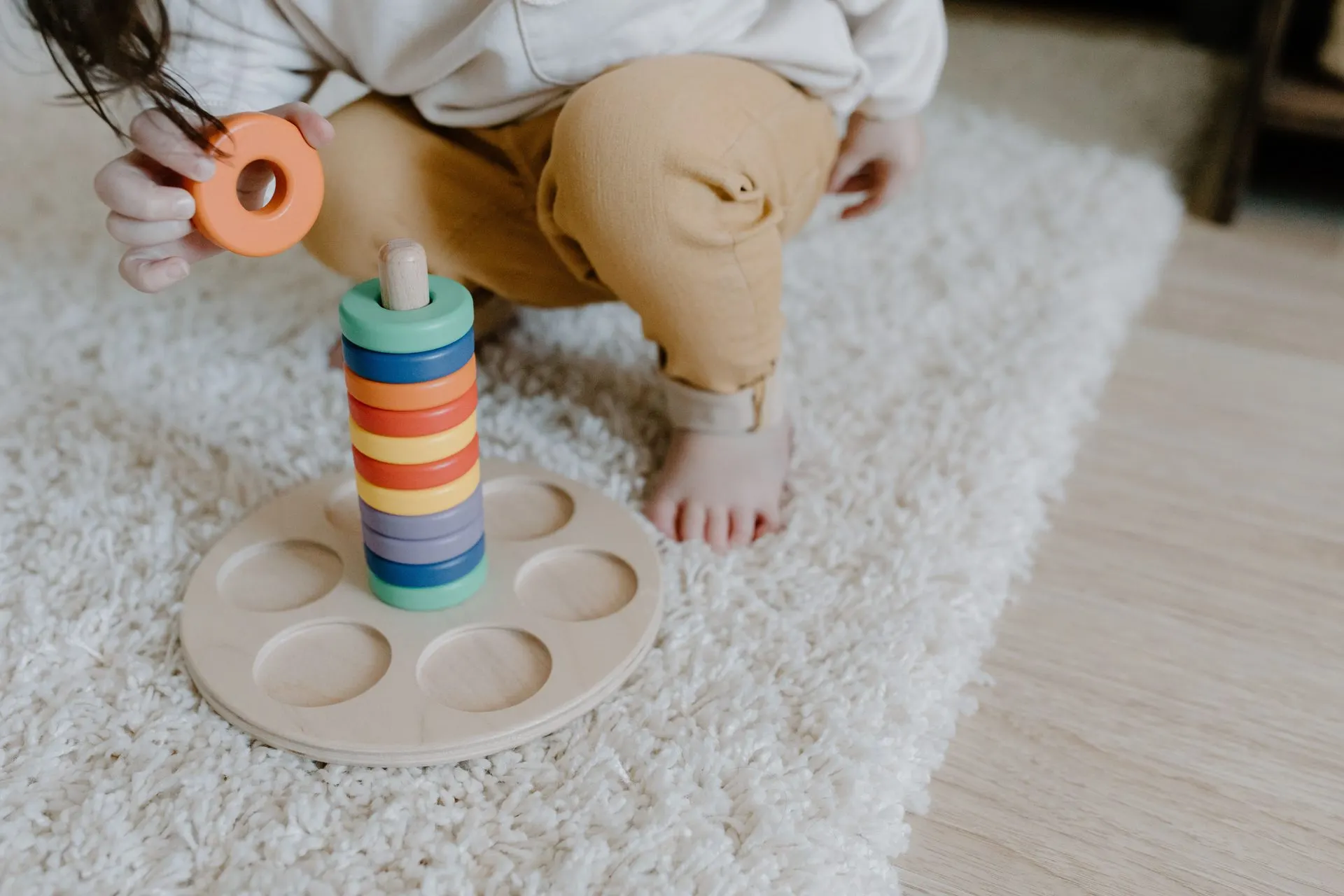
| 2 years | Grasping, early coordination, cause and effect | Chunky peg puzzles, object permanence boxes, simple stackers |
| 3 years | Fine motor control, sorting, practical life | Color sorting sets, lacing beads, child-sized cleaning tools |
| 4–5 years | Early literacy and math, sequencing | Sandpaper letters, counting rods, pattern blocks |
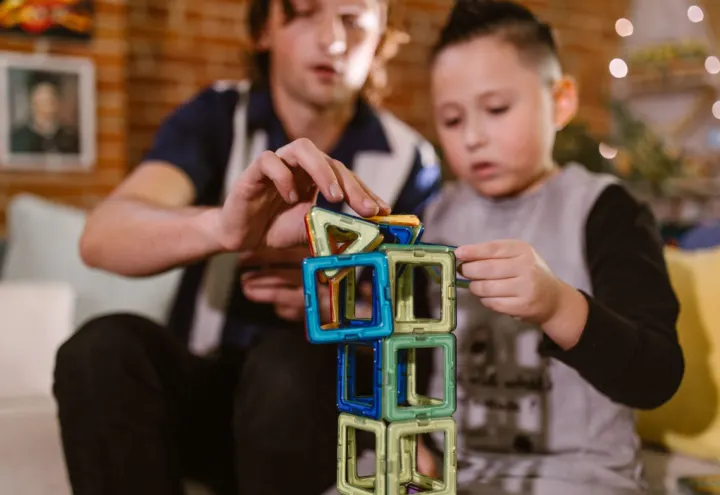
| 6–10 years | Abstract reasoning, planning, independence | Fraction sets, geography puzzles, building and engineering kits |
For more ideas organized by developmental stage, browse our guides to toys by age.
A Quick Checklist Before You Buy
Use these questions in the store or while browsing online. If you can answer “yes” to most of them, the toy is likely a good Montessori-style choice.
- Purpose: Can I name the main skill this toy builds?
- Simplicity: Is it free of unnecessary lights, sounds and distractions?
- Independence: Can my child use it without constant help?
- Self-correction: Will my child know if something is not quite right?
- Durability: Will it survive daily use and be worth passing on?
- Safety: Does it match the age label and have no small detachable parts for under-threes?
Do You Need “Official” Montessori Toys?
No. Many household objects work beautifully: a small pitcher for pouring, wooden spoons for transferring, or a basket of fabric scraps for exploring texture. These practical life tasks also make excellent fine motor skills activities for toddlers and preschoolers. Montessori is a way of observing and supporting your child, not a shopping list.
Fewer, well-chosen toys usually serve children better than a crowded playroom. A low shelf with a handful of options, rotated every week or two, keeps play fresh. We explain how to do that in our guide to setting up a Montessori toy shelf.
If you want ready-made options, explore our full collection of Montessori toys. At ThomsonKids.com, every design starts with the same questions as the checklist above.
Frequently Asked Questions
Are all wooden toys Montessori?
No. Wood is a common Montessori material because it is natural and sensory-rich, but a wooden toy covered in characters, noises or too many features is not Montessori in spirit. Look for purpose, simplicity, realism and self-correction rather than material alone.
At what age should I start using Montessori toys?
Montessori principles can guide play from infancy onward. For toddlers around two, simple stackers, peg puzzles and object permanence boxes are great starting points. Always choose toys sized safely for children under three and follow the age label printed on the packaging.
Are Montessori toys better than regular toys?
They are not magic, but their design encourages focus, independence and hands-on problem solving. Many families find children play longer with simple toys. A balanced collection can still include imaginative and creative toys alongside Montessori-style materials as your child grows.
How many Montessori toys does a child need?
Fewer than most parents expect. Many families keep six to ten toys on a low shelf at a time and rotate the rest in storage. This reduces overwhelm, makes tidying easier, and helps children engage deeply with each toy rather than flitting between many options.