
STEM toys are toys that help children explore science, technology, engineering and math through hands-on play. The best ones let kids build, test, measure and solve problems themselves, developing reasoning, spatial awareness and persistence long before these subjects appear in a classroom.
In this guide, the ThomsonKids.com Editorial Team explains how to tell a genuine STEM toy from a gadget with a STEM label, and which types suit each age.
Key Takeaways
- A true STEM toy asks the child to think, build or experiment, not just watch.
- Key skills include spatial reasoning, logic, cause and effect, and persistence.
- Many great STEM toys are simple: blocks, gears, scales and marble runs.
- Open-ended STEM toys grow with a child and stay useful for years.
- Always match a toy’s complexity and parts to your child’s age and safety needs.
What Does STEM Stand For?
STEM is short for science, technology, engineering and mathematics. Some educators add an “A” for arts, making STEAM, to recognize the role of creativity and design in problem solving.
For young children, these subjects are not separate lessons. When a four-year-old builds a ramp and rolls a ball down it, they are experimenting (science), designing (engineering), comparing distances (math) and using a simple tool (technology), all at once.
What Makes a Toy a Real STEM Toy?
The “STEM” label appears on many products, so it helps to know what to look for. A genuine STEM toy usually has these qualities:
- It requires active thinking. The child has to plan, build or test something.
- It allows trial and error. Mistakes are visible and fixable, which builds resilience.
- It shows cause and effect. Children can see how a change leads to a result.
- It has more than one solution. Open-ended toys encourage creative approaches.
- It can grow in difficulty. The same set supports simple and complex challenges.
A toy that does all the work, such as one that lights up and announces answers, may be fun but offers fewer chances for genuine problem solving. Simple often wins: the American Academy of Pediatrics’ guide to the power of play notes that blocks, shape sorters and puzzles are some of the best ways to support a child’s creativity and grasp of how the world works.
Skills STEM Toys Help Develop
Spatial Reasoning
Building with blocks, tiles and construction sets helps children understand how shapes fit together, how objects look from different angles and how structures balance. Many educators see spatial thinking as an important foundation for later math and science learning.
Logic and Sequencing
Coding games, pattern puzzles and step-by-step building kits teach children to think in order: first this, then that. This sequencing is the backbone of early coding and of following multi-step instructions in general.
Scientific Thinking
Magnifiers, balance scales and water-play kits invite children to observe, predict and test. These habits of inquiry are more valuable than any single fact.
Persistence and Problem Solving
When a bridge collapses or a marble run stalls, the child has to figure out why and try again. Planning, holding steps in mind and adjusting after a mistake all draw on executive function skills, and the Harvard Center on the Developing Child’s activities guide for executive function skills shows how play and games help children practice them.
Fine Motor Control
Snapping connectors, turning gears and placing small pieces strengthen hand muscles and coordination, which also supports drawing and writing.
Types of STEM Toys by Age
The right STEM toy depends on your child’s developmental stage. Here is a general guide. Follow age labels carefully, especially for children under three, because many construction and science kits contain small parts.
| Age | STEM Focus | Toy Types |
|---|---|---|
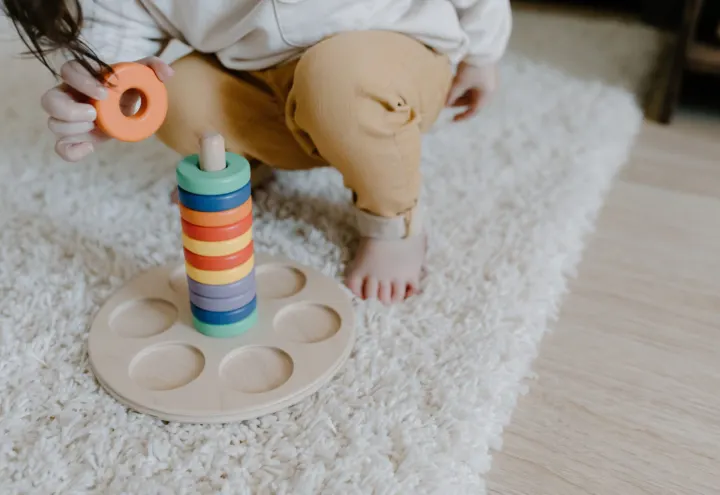
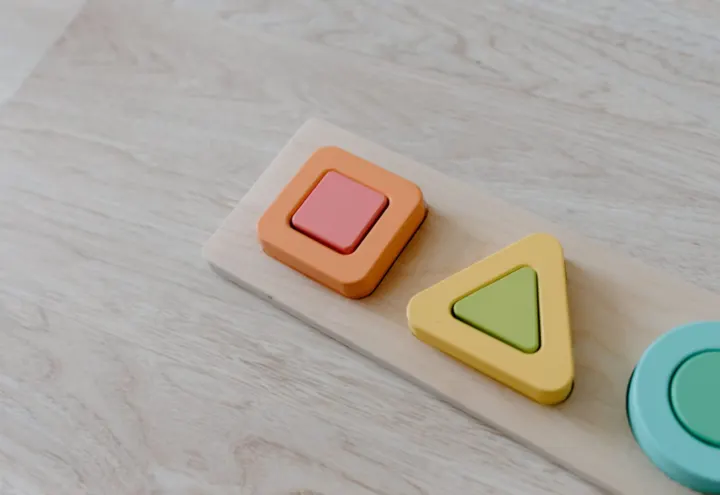
| 2–3 years | Cause and effect, shapes, stacking | Large stacking blocks, ball drops, chunky shape sorters |
| 4–5 years | Building, patterns, counting | Magnetic tiles, pattern blocks, simple gear sets, balance scales |
| 6–7 years | Engineering, early coding, measurement | Marble runs, screen-free coding games, beginner construction kits |
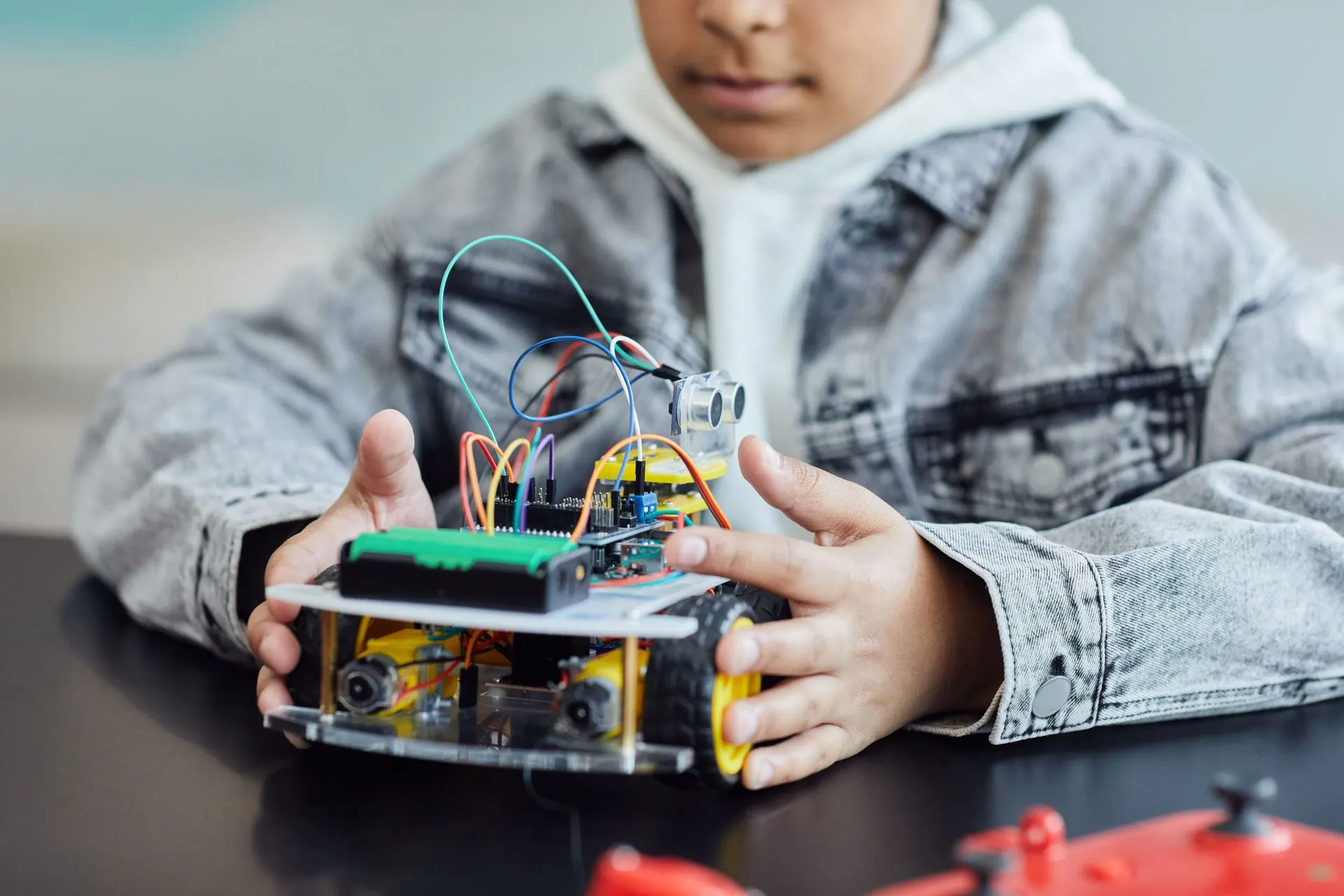
| 8–10 years | Complex design, simple circuits, experiments | Advanced building sets, circuit kits, science experiment kits |
For a deeper age-by-age breakdown, see our guides to toys by age.
Do STEM Toys Need Screens?
No. Many families assume technology learning requires a tablet, but early STEM learning is often more effective with physical materials. Children learn through their hands and senses, and real objects give feedback that a screen cannot.
Unplugged coding toys, for example, teach sequencing and debugging with cards, tiles or simple robots that are programmed with buttons. At ThomsonKids.com, we focus on screen-free STEM design for exactly this reason: kids stay engaged with the real world while building the logic that later supports digital skills.
How to Choose a Good STEM Toy
- Start with your child’s interests. A child who loves vehicles may enjoy ramps and gears; one who loves animals may prefer a nature exploration kit.
- Look for open-ended play. Toys with many possible outcomes keep children engaged longer.
- Check the challenge level. It should stretch your child slightly without causing constant frustration.
- Consider durability. Building sets get heavy use. Sturdy pieces last through siblings.
- Review safety. Check the age label, avoid small parts for under-threes, and supervise anything with magnets, batteries or water.
Getting the Most Out of STEM Toys
A STEM toy is only as powerful as the play around it. Ask open questions like “What would happen if…?” and resist the urge to fix things for your child. Let them experiment, even when you can see the answer.
Pair toys with simple home challenges, like those in our list of STEM activities for 5-year-olds. For school-age children, our guide to educational toys for 6- to 8-year-olds shows how STEM sets fit alongside games and creative play.
When you are ready to add new materials, explore our STEM toys collection or browse ThomsonKids.com educational toys designed for ages 2 to 10.
Frequently Asked Questions
At what age should kids start playing with STEM toys?
Children can start with simple STEM-style toys as toddlers. Stacking blocks, ball drops and shape sorters introduce cause and effect and spatial skills. As children grow, move toward building sets, patterns and coding games. Always choose toys whose age label matches your child to avoid small-part hazards.
Are STEM toys worth it?
Good STEM toys can be very worthwhile because they encourage active thinking, problem solving and persistence. The key is choosing open-ended, durable toys your child will use repeatedly. A few quality pieces that grow with your child usually offer more value than many single-use gadgets.
What is the difference between STEM and STEAM toys?
STEAM adds “arts” to science, technology, engineering and math. STEAM toys highlight creativity and design, such as building sets that encourage artistic structures or kits combining crafts with engineering. In practice, many great STEM toys already involve creativity, so the line between them is often blurry.
Can STEM toys help girls and boys equally?
Yes. STEM skills benefit every child, and interest depends on exposure and encouragement rather than gender. Offer a wide range of building, science and logic toys to all children, follow their interests, and avoid labeling any toy as “for boys” or “for girls.”