
To set up a Montessori toy shelf, choose a low, open shelf your child can reach, display a small number of toys with space around each one, and store the rest out of sight. Rotate toys every one to two weeks based on what your child is engaging with, so play stays fresh without buying more.
The ThomsonKids.com Editorial Team put together this step-by-step guide, from choosing the shelf to reading your child’s cues about when to rotate.
Key Takeaways
- A low, open shelf lets children choose and return toys on their own.
- Fewer toys on display usually means deeper, longer focus.
- Rotate based on observation, not a rigid calendar.
- Give every toy a clear “home,” such as a tray or basket.
- Keep a balance of skills on the shelf: fine motor, problem solving, language and creativity.
Why a Toy Shelf Works Better Than a Toy Box
A deep toy box hides everything in one jumbled pile. Children often dump it out, glance at the contents, and wander away. It is hard to focus when you cannot see your choices.
A shelf turns toys into an invitation. Each item is visible, complete and ready to use. This reflects a key idea from Maria Montessori’s work: a prepared environment that supports independence and concentration. As the Association Montessori Internationale explains, Montessori environments are designed to fit the needs of each stage of development.
Shelves also make tidying realistic for small children. When every toy has a spot, putting it back becomes part of the activity rather than a chore that adults handle.
Step-by-Step: Setting Up Your Montessori Shelf
- Pick the right shelf. Choose a sturdy, low, open shelf, anchored to the wall for safety. Your child should reach the top surface without climbing.
- Clear everything off. Start with an empty shelf so you are choosing intentionally rather than rearranging clutter.
- Select a small number of toys. Many families start with six to ten items for toddlers and preschoolers, adjusting from there.
- Use trays and baskets. Group pieces of one activity together, such as beads and a lace in a small tray.
- Leave breathing room. Space between items helps your child see each choice clearly.
- Arrange left to right, simple to complex. This gentle order mirrors Montessori classrooms and supports early sequencing.
- Store the rest. Put remaining toys in labeled bins in a closet or high cupboard, out of sight.
What to Put on the Shelf
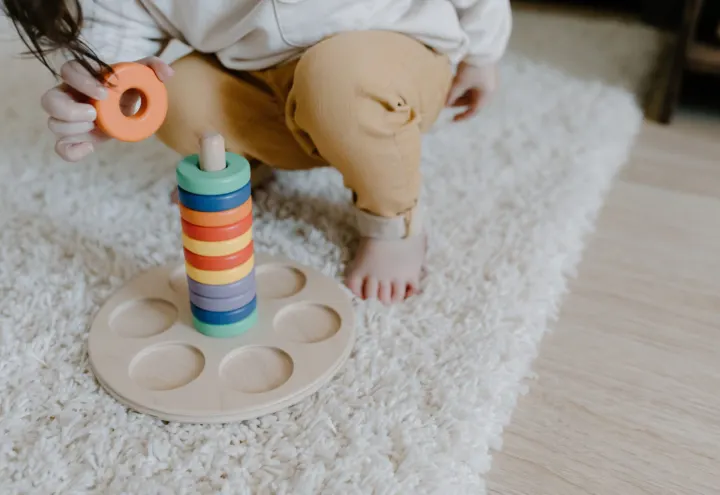
Aim for variety across developmental areas. A balanced shelf might include a puzzle, a fine motor activity, a building toy, a book or two, an art option and something for pretend or practical life. If you are unsure which toys qualify, our guide to what makes a toy Montessori covers the traits to look for.
| Skill Area | Ages 2–3 | Ages 4–6 | Ages 7–10 |
|---|---|---|---|
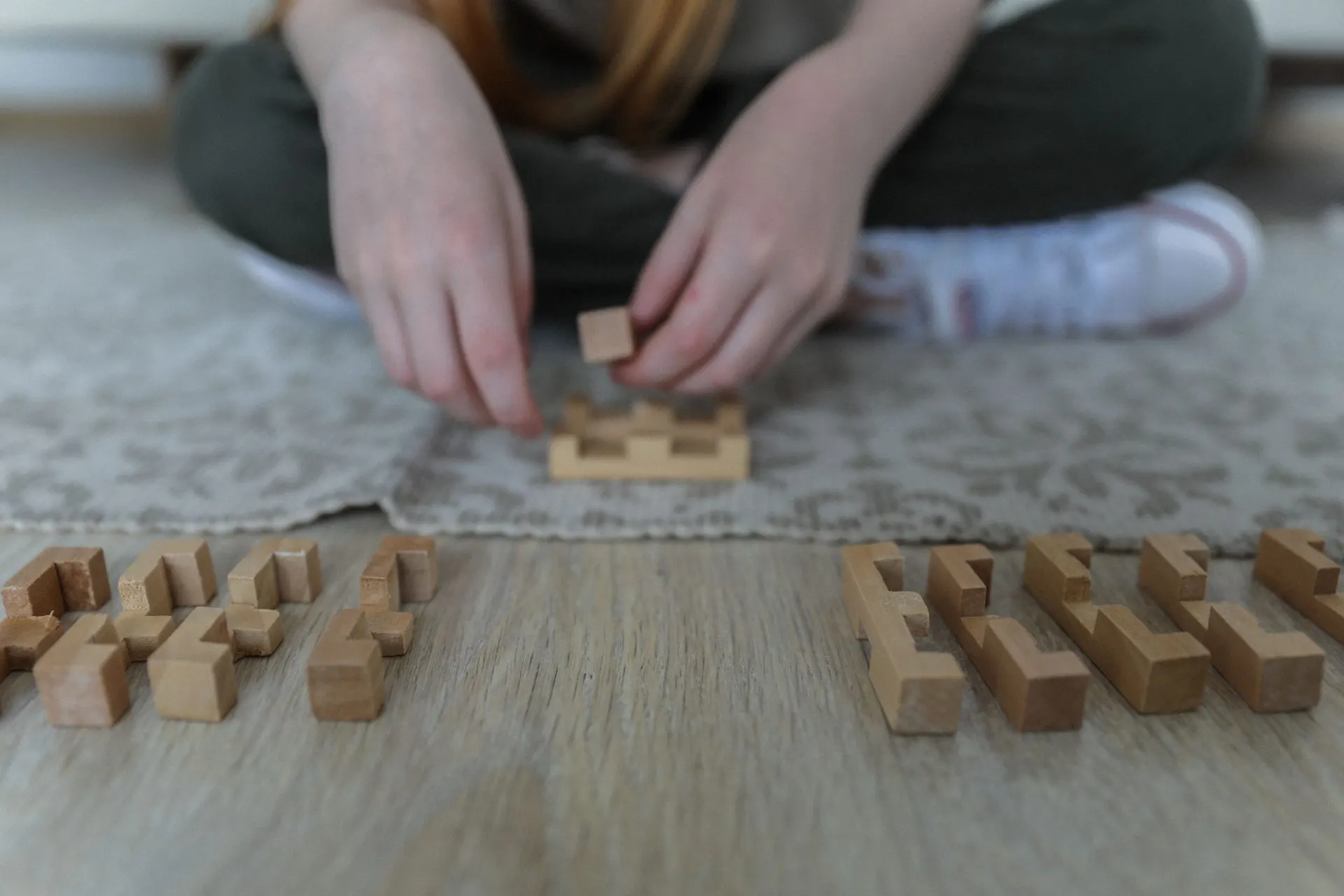
| Fine motor | Chunky peg puzzle, large lacing beads | Threading cards, tweezers and pom-poms | Weaving loom, model kits |
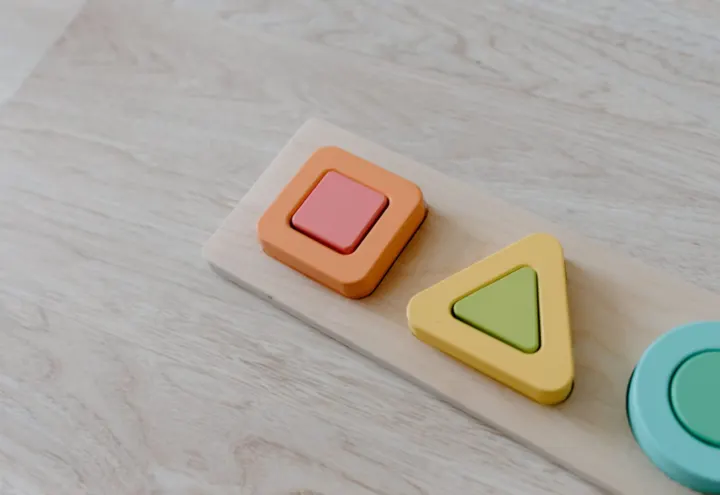
| Problem solving | Shape sorter, simple stacker | Pattern blocks, logic puzzles | Strategy games, engineering sets |
| Language | Realistic animal figures, board books | Picture cards, early readers | Chapter books, story dice |
| Creativity | Crayons, play dough | Open-ended blocks, loose parts | Craft kits, building bricks |
| Practical life | Small pitcher, sponge | Child-safe kitchen tools | Simple cooking and sewing projects |
For children under three, double-check that every item on the shelf is too large to be a choking hazard and is labeled for their age. Small loose parts should stay in storage until your child is older or closely supervised. Balloons, marbles, small balls and toys with small parts all appear on the American Academy of Pediatrics’ list of common choking hazards for young children.
How Toy Rotation Works
Toy rotation simply means swapping some displayed toys for stored ones on a regular basis. Toys that have been away for a while often feel new again. Even as a toy brand, ThomsonKids.com recommends rotating what you already own before buying anything new.
How Often Should You Rotate?
Many families rotate every one to two weeks, but observation matters more than the calendar. If your child is deeply absorbed in a puzzle, leave it out. If a toy sits untouched for days, swap it.
Rotate a Few Items at a Time
You do not need to replace the entire shelf. Changing two or three items keeps familiar favorites available while adding something fresh. This helps children feel secure and curious at the same time.
Watch for Signals
- Mastery: Your child completes the activity easily and quickly. Time to introduce a slightly harder challenge.
- Frustration: The toy is too difficult right now. Store it and try again in a few weeks.
- Misuse: Throwing or dumping often signals boredom or a need for gross motor play.
- Repetition: Doing something again and again is a sign of deep learning. Keep it out.
Common Mistakes to Avoid
The most common mistake is displaying too much. A crowded shelf brings back the toy-box problem. When in doubt, take something away.
Another is choosing only “educational” toys. Children also need open-ended materials like blocks and art supplies that spark imagination. Our article on how open-ended play builds problem-solving explains why these toys matter so much.
Finally, avoid rotating while your child watches. Doing it after bedtime lets them discover the “new” shelf in the morning, which adds a little magic.
Making It Work in a Small Space
You do not need a dedicated playroom. A single shelf in the living room or bedroom works well. Under-bed bins or a closet shelf can hold stored toys.
Because rotation reduces how many toys are out at once, it can actually make small homes feel calmer. That is why the ThomsonKids.com toy collection focuses on compact, durable pieces that look good on an open shelf and earn their place there.
If you are building your shelf from scratch, start with a few versatile pieces from our Montessori toys collection, then draw on our screen-free play ideas as your child’s interests grow.
Frequently Asked Questions
How many toys should be on a Montessori shelf?
There is no fixed number, but many families display around six to ten toys for toddlers and preschoolers. Start small, watch how your child plays, and adjust. If toys are ignored or dumped, the shelf may be too full. If your child seems bored, add a fresh challenge.
What age is best to start toy rotation?
Toy rotation can begin as soon as a child is crawling and reaching for toys, and it remains useful through the early school years. Older children can even help choose what goes into storage and what comes out, which builds decision-making and responsibility.
Where should I store toys that are not in rotation?
Store them out of sight and out of reach, such as in labeled bins on a closet shelf or under a bed. Grouping toys by type or skill makes it easier to plan each rotation and to find the next challenge when your child is ready.
Should I include books on the toy shelf?
Yes. A small selection of books displayed face-out on the shelf or a nearby ledge invites independent reading. Rotate books along with toys, and try to match them to your child’s current interests, such as animals, vehicles, seasons or a recent family outing.